Greater size and endurance
A larger hull and improved machinery made the seven Bremen-class ships useful both with the fleet and on distant foreign stations.
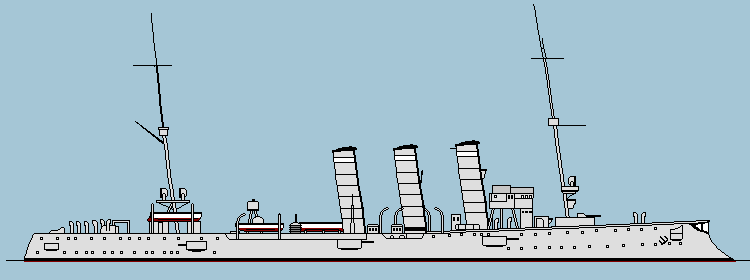
The full story
With the small cruisers of the Bremen class, the German navy started a tradition that would be typical for all following small cruisers and light cruisers of World War II: They were named after German towns. The class consisted of seven ships that did not differ very much from their predecessors, the Gazelle class. One of the ships - the Lübeck - was different in one important detail, for the first time, a turbine engine was installed on a small cruiser instead of the triple expansion engine that was typical for most ships of this time. While being very maneuverable ships, they took over quite a lot of water and started to roll heavily in stormy sears.
Despite not being modern ships at the outbreak of World War I, those ships were used intensively, several were lost and some of them even survived World War II - but not as combat ships anymore.
During the war, the ship took part in several fleet operations including the Battle of Jutland, it was also used for coastal defence in the Baltic sea and as a torpedo target ship between 1917 and 1918. After the war it was delivered to England where it was broken down.
At a glance
Dimensions, armament, protection and performance.
Construction record