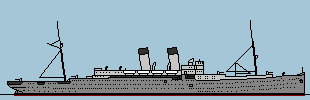
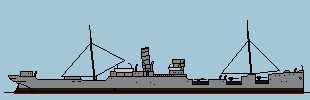
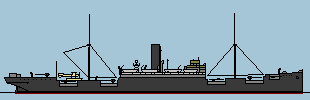
Three approaches to raiding

Warships hidden in merchant hulls

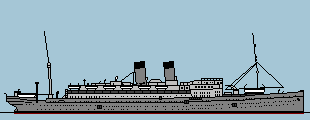
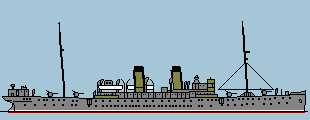
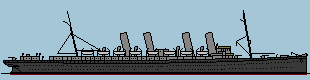
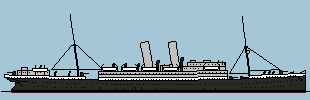
Fast passenger liners were the prewar choice for conversion, but their distinctive silhouettes and heavy fuel consumption made them vulnerable. Captured Allied ships provided a second, improvised group of raiders at overseas bases.

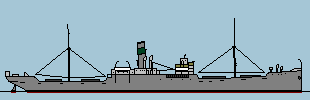
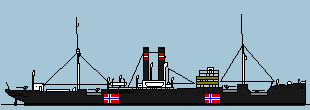
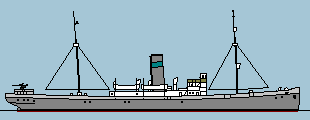
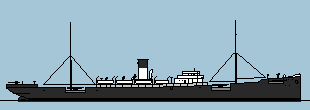
Slow, inconspicuous freighters proved the most successful solution. Their concealed weapons, endurance and ability to change appearance allowed Möwe, Wolf and their contemporaries to attack commerce across the Atlantic, Indian and Pacific oceans.
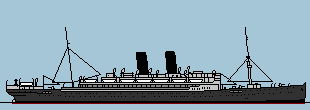
Profile of Berlin

Merchant raider

Berlin

1914–1931
The fast North German Lloyd liner became an auxiliary cruiser and minelayer before internment in Norway ended her wartime cruise.Explore ship →
Profile of Cap Trafalgar

Merchant raider

Cap Trafalgar

Disguised as a British liner, Cap Trafalgar fought the armed merchant cruiser Carmania and was sunk in their dramatic single-ship action.Explore ship →
Profile of Cormoran

Merchant raider

Cormoran

1909–1917
The captured Russian merchant ship Rjäsan was armed at Tsingtao and operated across the Pacific before being interned and scuttled at Guam.Explore ship →
Profile of Geier

Merchant raider

Geier

1916–1917
The captured British freighter Saint Theodore became Geier but was intercepted and sunk only weeks after entering service.Explore ship →
Profile of Greif

Merchant raider

Greif

1914–1916
Greif broke into the North Sea in 1916 and fought the armed merchant cruiser Alcantara in a battle that destroyed both ships.Explore ship →
I

Merchant raider

Iltis

1905–1917
Converted from the freighter Turritella, Iltis made a brief minelaying sortie before British forces trapped and sank her.Explore ship →
Profile of Kaiser Wilhelm der Große

Merchant raider

Kaiser Wilhelm der Große

1897–1914
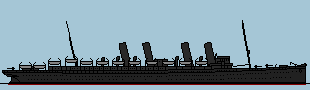
The former record-breaking liner became Germany's first wartime merchant raider and was sunk off Spanish Sahara.Explore ship →
Profile of Kronprinz Wilhelm

Merchant raider

Kronprinz Wilhelm

1901–1923
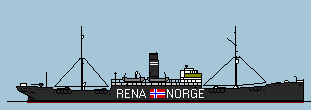
Kronprinz Wilhelm conducted a long Atlantic commerce-raiding cruise before fuel and supply shortages forced internment in the United States.Explore ship →
Profile of Leopard

Merchant raider

Leopard

The captured British freighter Yarrowdale was converted in Germany but destroyed during her first attempt to reach the Atlantic.Explore ship →
Profile of Meteor

Merchant raider

Meteor

Meteor combined commerce raiding with offensive minelaying before her crew scuttled the ship when British cruisers closed in.Explore ship →
Profile of Möwe

Merchant raider

Möwe

1914–1945
The disguised freighter Möwe became the most successful German auxiliary cruiser of the war across two Atlantic raiding voyages.Explore ship →
Profile of Prinz Eitel Friedrich

Merchant raider

Prinz Eitel Friedrich

1904–1935
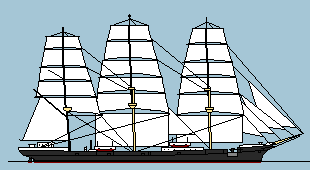
The passenger liner raided Allied shipping in the Pacific and Atlantic before seeking internment at Newport News.Explore ship →
Profile of Seeadler

Merchant raider

Seeadler

The sailing ship Seeadler used disguise and exceptional range to raid commerce until she was wrecked at Mopelia.Explore ship →
Profile of Vineta

Merchant raider

Vineta

The auxiliary steamer Cap Polonio briefly served as Vineta, but unsuitable machinery prevented an operational raiding cruise.Explore ship →
Profile of Wolf

Merchant raider

Wolf

Wolf completed an extraordinary fifteen-month voyage using mines, disguise and a reconnaissance aircraft against global shipping.Explore ship →
Profile of Wolf II

Merchant raider

Wolf II

The freighter Wachtfels was prepared as Wolf II but mechanical problems ended her planned raiding deployment.Explore ship →