The refined coastal-defense design
The final pair improved protection and subdivision while retaining the concentrated armament and limited range suited to service close to German waters.
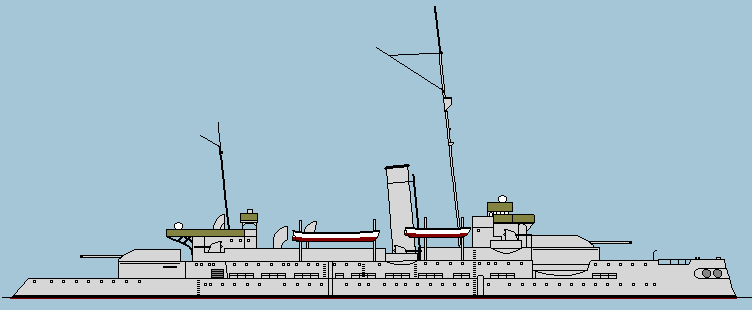
Design and service
The coast defence ships of the Siegfried class were the first real capital warships build in Germany and the last before Kaiser Wilhelm II came into power and started the huge naval construction program. With their three 24 cm guns, those ships were not armed very heavily, but they were the first German warships that carried their main artillery in closed gun turrets. The last two ships of the class, Odin and Ägir had some minor modifications and different armor protection, but besides that, all eight ships were very similar. Because of their rolling movements through the seas, those ships got the nickname "Meerschweinchen" - guinea-pig.
Shortly after the beginning of the new century, all ships were modified in a major reconstruction, a second funnel and enlarged hull were the most obvious changes, and with their new coal storage's, their range was almost doubled. During World War I, those old ships were still used for coastal defence, and all of them survived the war. As they were too old for further military services most of them were scrapped while a few were converted in to civilian transport ships.
The Odin was the longest surviving ship of its class. Its military history was similar to the other ships, and in 1922 it was converted in to a civilian transport. It was used in this role until 1935 when it was broken down.
At a glance
Dimensions, armament, protection and performance.
Construction record