Development
The ships
The escort vessels (in German called "Flottenbegleiter") F1 - F10 could be described with a single word: Failure. In the early 1930s the group of ten escort vessels was built. Since those ships should not only have used as fast escort ships but also as fast mine-sweepers, submarine hunter and test beds for the new high-pressure destroyer engines, too much was out into this small design.
The result was a very bad designed ship with a totally unreliable engine system that spend long times in shipyards for repair. As a result, the Flottenbegleiter were almost never seen in operational action and were transferred for several different secondary tasks. Some were used as fleet tenders, some for training Uboat crews.
As the number of engine breakdowns increased to not tolerable level in the later years of the war, the ships were taken out of action. Only one of them, the F9, was lost through enemy actions, when it was hit by an torpedo of the British submarine Ursula in December 1939 and sunk within 3 minutes.
A successor class of "Schnelle Flottenbegleiter" - fast escort vessels - was planned but never realized. To close the gap of desperately needed escorts, several captured ships (French and Dutch) in combination with destroyers, torpedo boats and mine hunters were used for this task, especially in the British Channel and French waters.
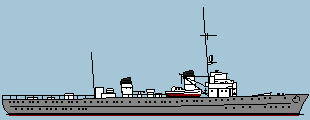
Flottenbegleiter
F1
1935–1947- Laid down
- Germaniawerft Kiel, 1934
- Launched
- 01.03.1935
- Commissioned
- 15.12.1935
- Fate
- scrapped 1947 (France)
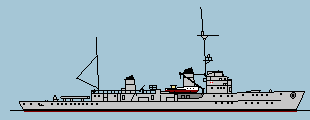
Flottenbegleiter
F2
1936–1946- Laid down
- Germaniawerft Kiel, 1934
- Launched
- 02.04.1935
- Commissioned
- 27.02.1936
- Fate
- sunk 30.12.1946
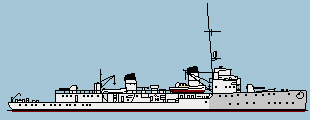
Flottenbegleiter
F3
1936–1945- Laid down
- Germaniawerft Kiel, 1934
- Launched
- 01.06.1935
- Commissioned
- 07.03.1936
- Fate
- sunk 03.05.1945
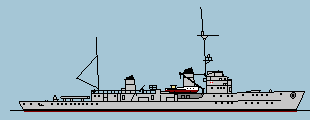
Flottenbegleiter
F4
1936–1949- Laid down
- Germaniawerft Kiel, 1934
- Launched
- 02.07.1935
- Commissioned
- 05.04.1936
- Fate
- scrapped 1949
Flottenbegleiter
F5
1936–1945- Laid down
- Germaniawerft Kiel, 1934
- Launched
- 15.08.1935
- Commissioned
- 01.05.1936
- Fate
- sunk 29.01.1945
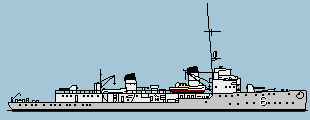
Flottenbegleiter
F6
1936–1945- Laid down
- Germaniawerft Kiel, 1934
- Launched
- 01.10.1935
- Commissioned
- 25.05.1936
- Fate
- sunk 30.03.1945
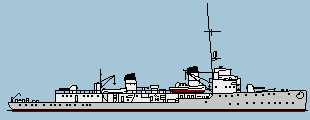
Flottenbegleiter
F7
1937–1957- Laid down
- Blohm & Voss Hamburg, 1935
- Launched
- 25.05.1935
- Commissioned
- 15.02.1937
- Fate
- scrapped 1957-1958
Flottenbegleiter
F8
1937–1950- Laid down
- Blohm & Voss Hamburg, 1935
- Launched
- 27.07.1935
- Commissioned
- 08.04.1937
- Fate
- scrapped 1950
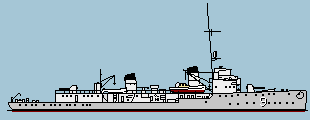
Flottenbegleiter
F9
1937–1939- Laid down
- Kriegsmarinewerft Wilhelmshaven, 1934
- Launched
- 11.05.1936
- Commissioned
- 21.08.1937
- Fate
- sunk 14.12.1939
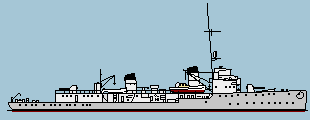
Flottenbegleiter
F10
1938–1950- Laid down
- Kriegsmarinewerft Wilhelmshaven, 1934
- Launched
- 11.05.1936
- Commissioned
- 12.08.1938
- Fate
- scrapped 1950