Falke is commissioned.
Catapult shipRole
1942–1945Service or project period
Design and service
The story of Falke
Schleuderschiffe - catapult ships - were used by Germany since the 1920s. Their most famous use before the war was their usage as floating bases in the South Atlantic to enable flying boats to cross the Atlantic for mail delivery. Stationed at the at the African and South American coast, they were used to refuel and resupply the small flying boats like the Dornier Wal on their way across the ocean.
Equipped with a catapult, they were able to launch the flying boats instead of doing a manual takeoff from the water. This allowed the flying boats to carry more fuel and allowed a higher range to fly.
Based on the experience with the civilian catapult ships, additional ships were built during the war for military purposes only. Together with their civilian counterparts, they were used to maintain and launch reconnaissance flying boats in areas outside of fixed installations.
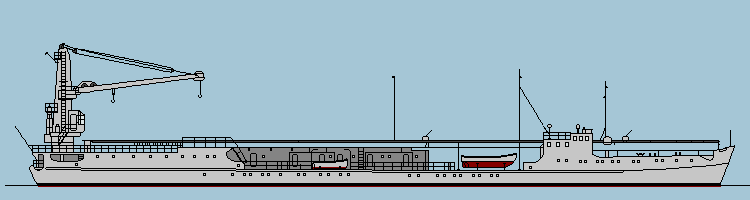
The Falke and its sister ship Bussad were mainly used in Denmark and Norway during the war, which both survived. Their crane was able to lift aircraft up to 20t. Their catapult was able to launch aircraft of the same weight, enableing the ship to carry Dornier Do18, Dornier Do24 or Blohm &Voß BV138 aircraft.
Operational history
Service timeline
Stationed in Bergen, Norway.
Taken over by the Soviet Union. Propable new name Aeronaft, further fate unknown.
At a glance
Technical profile
Dimensions, armament, machinery and performance.
Dimensions
- Size (Max)
- 2040 t
- Length (Total)
- 98,30 m
- Length (Waterline)
- 95,00 m
- Beam
- 14,00 m
- Draft
- 2,33 m
- Crew
- 54
Armament
- 2 cm MG
- 3
- Floatplanes
- 1
Machinery
- Shafts
- 2
- Engines
- 2
- Type
- 8-cyl KHD diesel engines
Performance
- Total Performance
- 1800 shp
- Speed
- 12 kn
- Range
- 5200 sm at 12 kn
The archive
Models
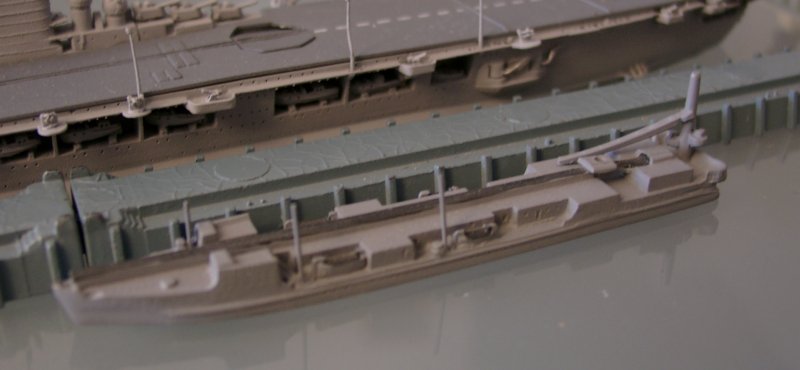
Ship models in 1/1250 scale.