
First trials.
186,0 m (later 187,9 m)Overall length
14519 tMaximum displacement
28,0 knMaximum speed
619-951Complement
Design and service
The story of Deutschland / Lützow
The Treaty of Versailles sharply restricted German naval construction after World War I. Germany could retain six old pre-dreadnought battleships, six light cruisers, twelve destroyers and twelve torpedo boats. Article 190 permitted replacement of the battleships twenty years after commissioning, but limited each new armored ship to 10,000 tons.
The first replacement, Panzerschiff A, was ordered in 1928 and later entered service as Deutschland. Designers considered both a heavily armored coastal-defense ship and a faster cruiser with greater range but lighter protection. The latter concept was selected because it could threaten French merchant shipping while avoiding more powerful warships.
The design principle was to outrun any more heavily armed opponent and outgun any faster one. This concept was credible against the cruisers and older battleships then in service, although it became less effective after the appearance of fast battleships.
The Panzerschiffe introduced extensive welding and diesel propulsion to ships of this size. Welding reduced structural weight, while diesel engines provided the long range required for commerce warfare. Their declared displacement was 10,000 tons, but full-load displacement was about fifty percent greater. Deutschland, Admiral Scheer and Admiral Graf Spee shared the same basic design but differed visibly, particularly in their bridge structures.
All ships were used in the international sea patrols off the Spanish coast during the Spanish Civil War and had different fates in World War II. The Deutschland was damaged several times during the war including a loss of both props and rudder. In 1940 the ship was renamed to Lützow to reduce the propaganda damage if a ship named " Deutschland " would be sunk.
In 1940 the two remaining Panzerschiffe (Deutschland / Lützow and Admiral Scheer) were reclassified as Heavy Cruiser
Deutschland entered service in April 1933 as the first of the new Panzerschiffe and completed seven non-intervention patrols during the Spanish Civil War. While anchored off Ibiza in May 1937, she was attacked by Republican aircraft and suffered serious casualties. At the beginning of the Second World War she conducted a short commerce-raiding cruise in the North Atlantic, sinking three merchant ships, before returning to Germany and being renamed Lützow. During Operation Weserübung she was damaged in the Oslofjord and then torpedoed by the British submarine Spearfish on the voyage home. Further damage repeatedly interrupted her planned Atlantic and Arctic deployments, although she later fought convoy JW 51B during Operation Regenbogen. From late 1944 Lützow supported German forces in the Baltic with shore bombardments. She was sunk by bombs at Swinemünde in April 1945, continued firing from the shallow water and was scuttled at Swinemünde on 4 May 1945.
Operational history
Service timeline
Commissioned, trials and training until the end of 1933.
Battle and artillery drills in the North Atlantic, together with CL Köln.
Repairs and refits in Wilhelmshaven.
Engine endurance tests on a voyage to South America, the Deutschland sails 12286 sm in 32 days without any problem.
Installation of a catapult and float plane.
Atlantic operations together with Admiral Scheer. Both ships meet CL Emden.
Repairs and refits in Wilhelmshaven.
The Deutschland sails around Great Britain, followed by a visit of Copenhagen and battle training in North and Baltic Sea.
Together with Admiral Scheer first operation in Spanish waters.
Second Spain operation.
Third Spain operation.
Modifications during refits.
Fourth Spain operation. Joint operations with Italian, British and American ships off the Spanish coast.
While anchoring at Ibiza, the Deutschland is attacked by Spanish Republican aircraft, causing damages and several casualties.
Send to Gibraltar, the death sailors are buried by the British military, but later transferred to Germany.
Repairs and training.
Fifth Spain operation.
Sixth Spain operation.
Battle training in the North Atlantic. Tests of the new Radar (Funkmess) equipment and joint training with U-boats.
Seventh Spain operation and battle training in the North Atlantic.
Battle training in the North Atlantic together with resupply ships.
Deutschland leaves Wilhelmshaven for the North Atlantic, multiple resupplies from the tanker Westerwald.
New orders allowed commerce war.
Deutschland sinks three merchants.
Returned to Gotenhafen (Gdynia).
Returns to Wilhelmshaven, renamed to Lützow.
Reclassified as heavy cruiser.
Operation "Weserübung": Lützow joins 5th Squadron after passing the Kiel Canal.
Sails through the Great Belt.
Reaches Oslo Fjord. In the battle of the Droebak Narrows, the Lützow was hit three times. After the destruction of the CA Blücher, Lützow takes command of the 5th Squadron.
Enters Oslo. Later this day, the Lützow head for Horten for repairs but is then ordered back to Kiel without any escorts.
Hit by a torpedo of the British submarine Spearfish, both props and the rudder are lost. The crippled ship is towed back to Kiel by the 17th Anti-Submarine and 19th Minesweeper Flotillas.
Arrived in Kiel.
Repairs in Kiel.
Sailed to Drontheim Fjord for torpedo practice.
Hit by the torpedo of a single British torpedo bomber in the Eger Sound. The planned Atlantic mission has to be canceled. Lützow again goes into the dock.
Training in the Baltic Sea.
Transferred to Norway, first to the Lo Fjord (Drontheim Fjord) then to the Bow Bight (Narvik).
During a raid on a British convoy (together with the Tirpitz and other vessels), Lützow hit a sand bank near Storboenfeuer (Tjeld Sound) and is moved to Lo Fjord again.
Covered by the destroyers Friedrich Ihn and Z24 and the torpedo boats T7 and T15 the heavy cruiser Lützow transfers to Trondheim.
T7, T9, T10, T12 and T15 escort the heavy cruiser Lützow on its way back to Germany.
Returns to Kiel for repairs.
Training in the Baltic Sea, after that the Lützow moves to Bow Bay and Kaa Fjord (Alta Fjord).
"Operation Regenbogen": Together with CA Admiral Hipper and the destroyers Richard Beitzen, Theodor Riedel, Friedrich Eckoldt, Z24, Z30 and Z31 the Lützow attacks the British convoy JW 51B escorts east of Bear Island. The squadron disengaged after Admiral Hipper is damaged by British cruisers Jamaica and Sheffield and DD Friedrich Eckoldt is sunk.
Returns to Germany.
Transferred to Libau via Gotenhafen (Gdynia).
Used for cadet training.
Operation "Unternehmen Tanne West": Escorted by the torpedo boats T3, T4 and T14, the Lützow covers ore transports from Sweden.
In order to cover evacuation of German citizens from Riga, the Lützow and the torpedo boats T1, T4, T9 and T12 are sent to Riga. Because of fuel shortages, the ships are ordered to enter the port of Libau to support the flak cover.
The Lützow is sent to Gotenhafen (Gdynia) to get additional antiaircraft guns.
Together with the CA Prinz Eugen, the destroyers Z35 and Z36 and the torpedo boats T1 and T8, the Lützow sails to Aaland Island to escort transports with German soldiers on board.
Lützow, CA Prinz Eugen, the destroyers Z25, Z35 and Z36 and torpedo boats T13, T16 and T20 support the German army at Memel and Sworbe.
Escorted by the destroyers Z28 and Z35 and the torpedo boats T13, T20 and T21, the Lützow supports the retreating German army with short bombardments at the Memel coast.
Further army support at Memel, Elbing and Danzig.
Returns to Swinemünde.
After several bomb hits, the Lützow sinks on her keel at the Mellin entrance at Swinemünde. The stern 28cm turret and several secondary and Flak guns are still working.
Fires at Russian positions at Diefenov with 28cm guns.
Large fire, the ship is scuttled.
The Lützow is salvaged in Swinemünde by Russian troops.
Lützow enters the Soviet fleet records.
The ship is ordered to be a experimental vessel for the weapons tests which started 20.07.1947 (like Graf Zeppelin some weeks later). Two days later Lützow is sunk.
At a glance
Technical profile
Dimensions, armament, protection and performance.
Dimensions
- Size (Max)
- 14519 t
- Length (Total)
- 186,0 m (later 187,9 m)
- Length (Waterline)
- 181,7 m
- Beam
- 20,69 m
- Draft
- 7,25 m
- Crew
- 619-951
Armament
- 28 cm L/52 C/28
- 6
- 15 cm L/55 C28
- 8
- 3,7 cm L/83
- 8
- 2 cm MG L/64
- 8-10
- 53,3 cm Torpedoes
- 8
Aircraft
- Arado Ar 196
- 2
Protection
- Deck
- 40 mm (max)
- Belt
- 80mm (max)
- Command Tower
- 150 mm
- Turrets
- 140 mm (max)
Machinery
- Shafts
- 2
- Engines
- 8
- Type
- MAN 9-cyl. diesel
Performance
- Total Performance
- 48390 shp
- Speed
- 28,0 kn
- Range
- 18650 miles at 15 kn
The archive
Photographs
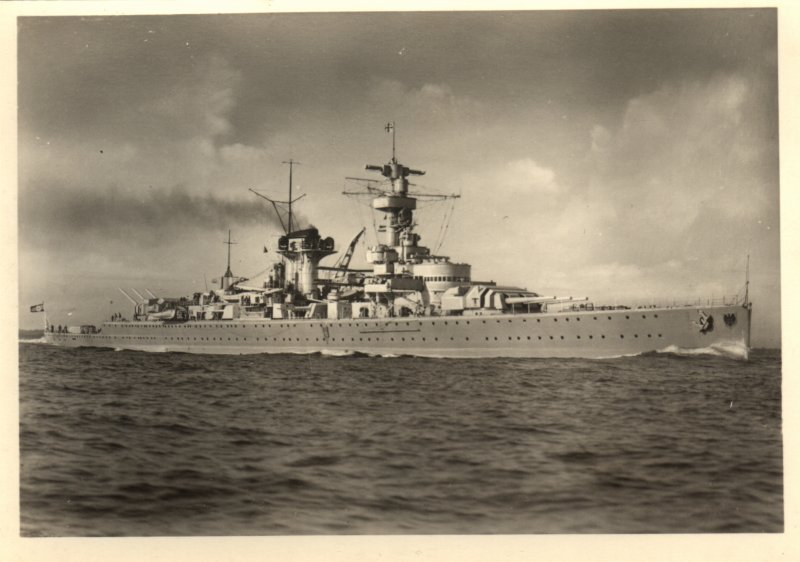
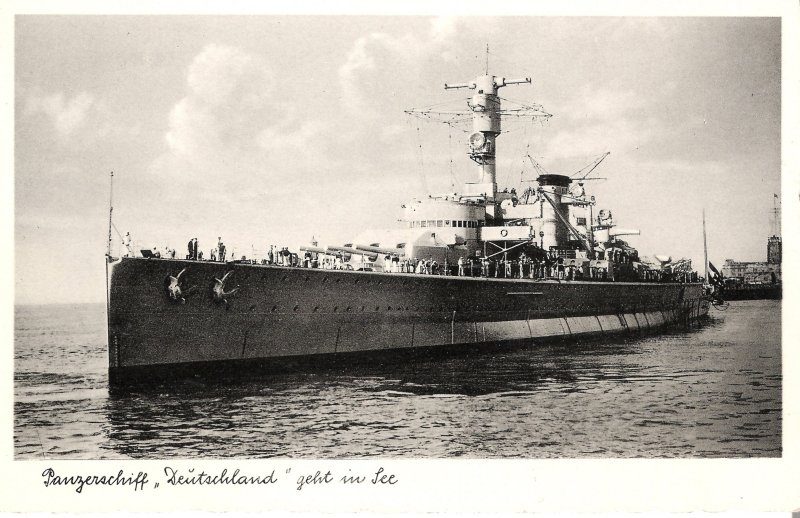
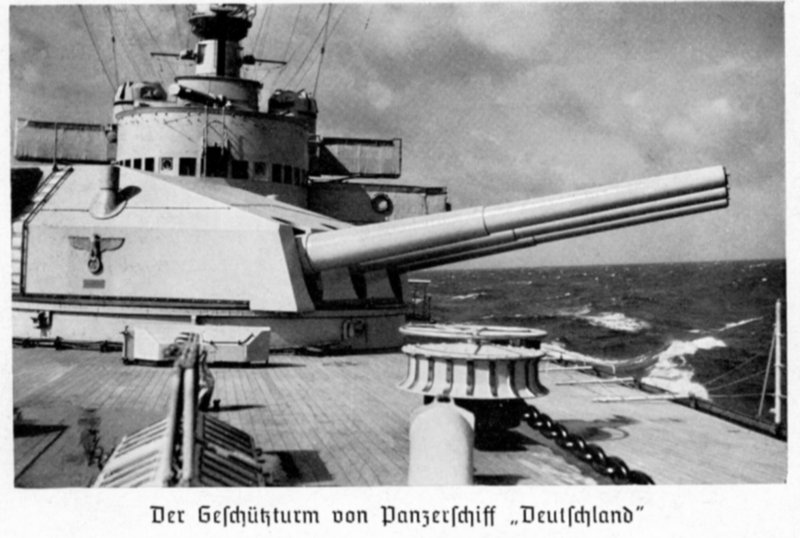
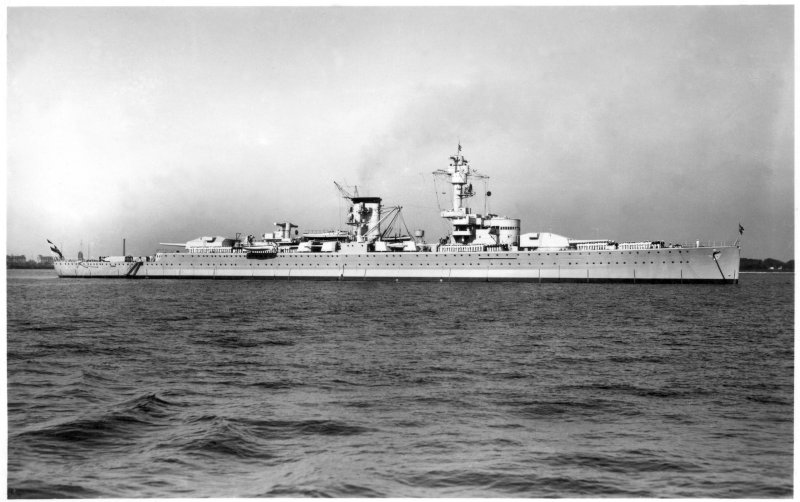
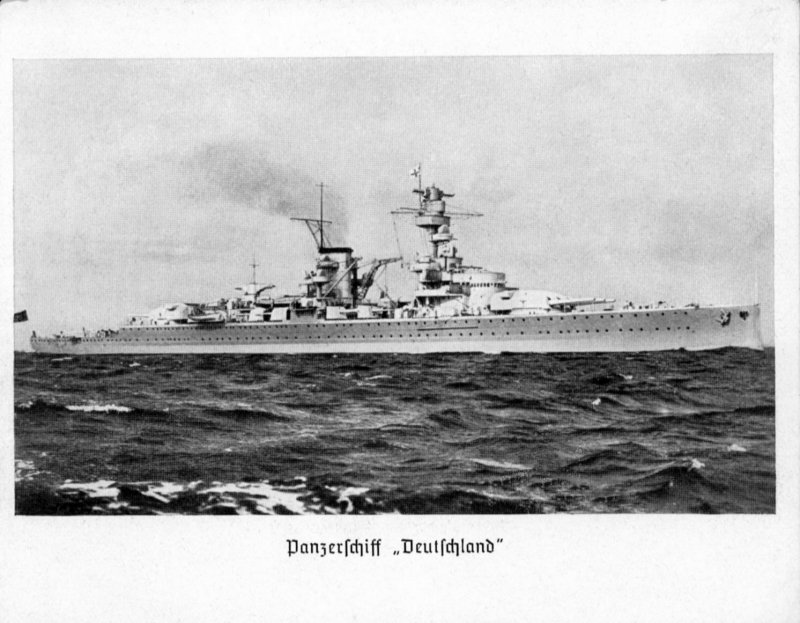
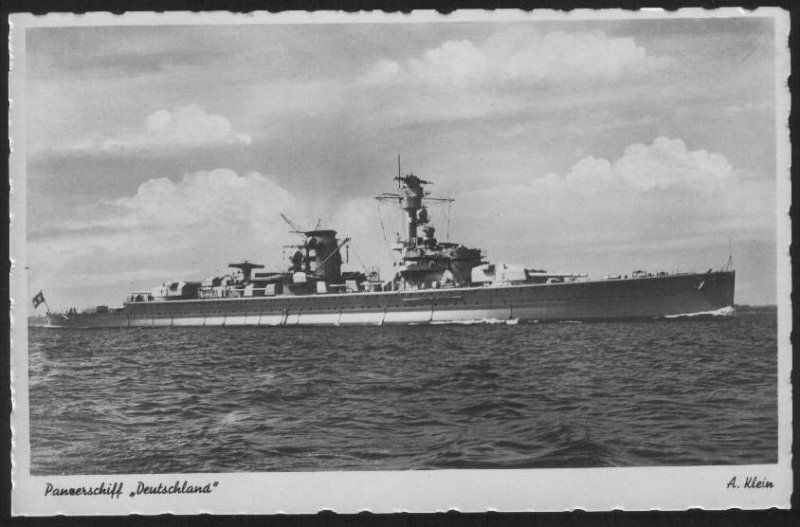
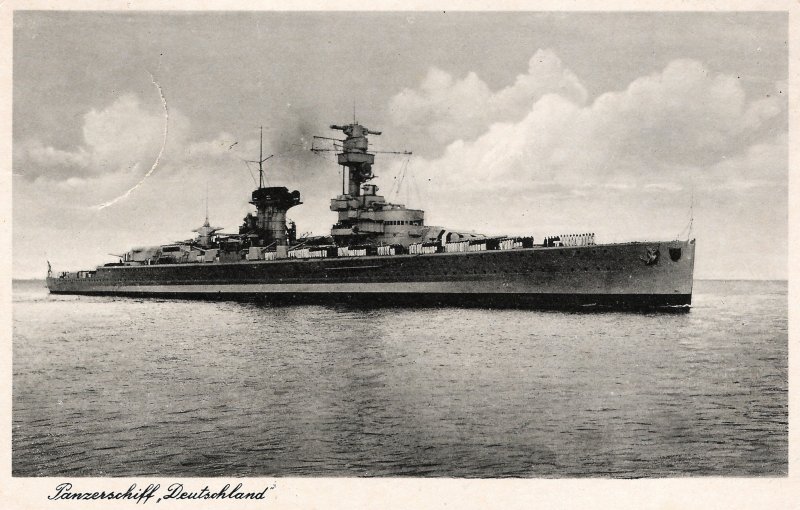
Original postcard and photographic material from the private collection.
The archive
Models
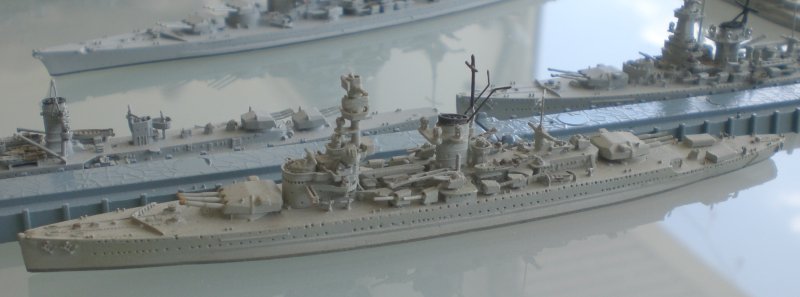
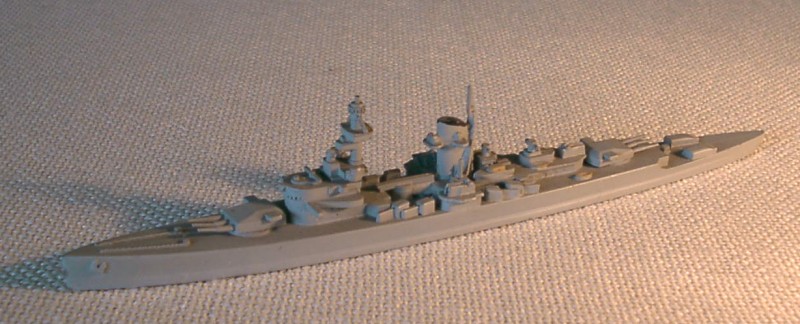
Ship models in 1/1250 scale.
Construction record
Deutschland / Lützow
- Laid down
- Deutsche Werke Kiel, 05.02.1929
- Launched
- 19.05.1931
- Commissioned
- 01.04.1933
- Fate
- blown up 04.05.1945 (Swinemünde)
- Cost
- 80 Mio Reichsmark