Russian orders completed for Germany
Two cruisers begun for Russia were adapted to German weapons and service, then fought with the Imperial Navy in the North Sea.
The full story
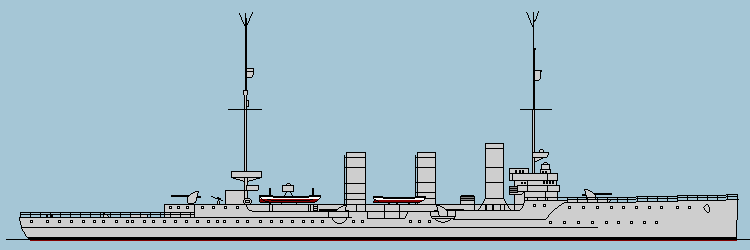
The small cruiser Pillau and its sister ship Elbing were quite unique in the German Imperial Navy. Although being very similar to the ships of the Königsberg II class these cruisers were different - they were originally ordered by Russia as Muavjev Amurskij and Admiral Nevelovsk in 1913. At the outbreak of the war, both ships were almost completed and taken over by the German Navy.
Both ships took part in the battle of Jutland as part of the II Reconnaissance Group. They engaged British cruisers and during the battle, the Pillau was hit by a British 30,5 cm shell disabling four boilers, but the ship could escape. Elbing was not damaged this way, but it was rammed by the old German battleship Posen while evading British destroyers and sunk after that.
Operational history
Elbing is commissioned
Rammed by a torpedo boat, damaging cruiser's stern.
Training and trials.
Sent into the Baltic Sea.
Together with the cruiser Augsburg, the mine layer Rügen and several torpedoboats and mine hunters, the Elbing lays a mine barrier off Lyserort.
Ordered into the North Sea.
Repairs in Danzig.
Attached to the 2nd Reconnaisance Group.
Fleet operation with several battlecruisers to cover returning torpedo boat flotillas.
Battle of Jutland: As part of the 1st reconnaissance group, the Elbing takes part in the battle. The ship is hit once, killing 4 crew members, wounding 12. During the night battle, the cruiser is rammed by the battleship Posen at 0:30, disabling all engines and generators. About two hours later, the crew is taken over by the torpedo boat S53, at 03:00 the ship is sunk by explosive charges when British ships came into sight.
At a glance
Dimensions, armament, protection and performance.
The archive
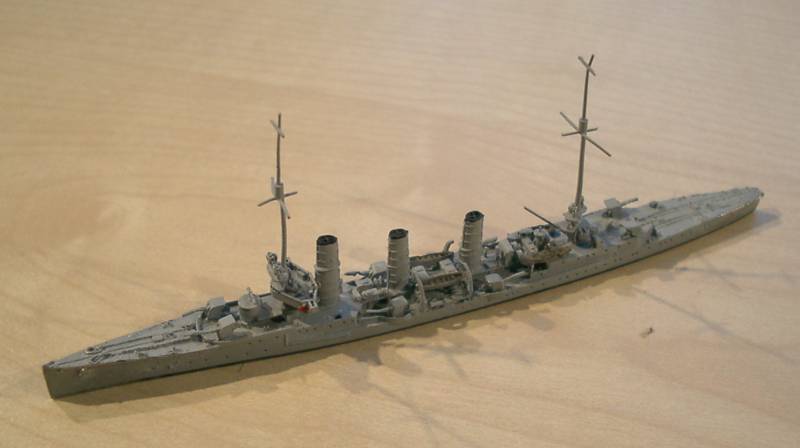
Ship models in 1/1250 scale.
Construction record